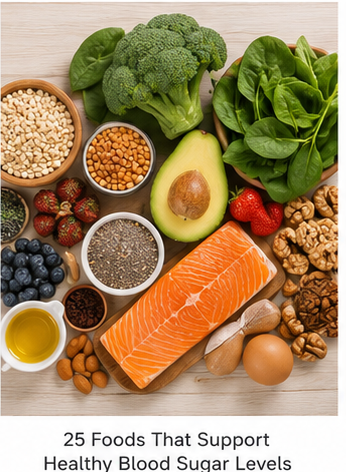
25 Foods That Support Healthy Blood Sugar Levels: A Practical Guide to Smarter Eating is for anyone who wants better energy, fewer cravings, and a more balanced approach to daily food choices.
Have you ever eaten lunch, only to feel hungry again a few hours later? Or maybe you have experienced that afternoon energy crash that makes you reach for a sweet drink, biscuit, or quick snack just to keep going. Many people go through this without realizing that their food choices may be affecting how steady their energy feels throughout the day.
Blood sugar is not usually influenced by one meal alone. It is shaped by repeated habits: what you eat, how often you eat, your portion sizes, activity level, sleep quality, hydration, and stress. That is why choosing foods that support healthy blood sugar levels can be a practical step toward better overall wellness.
The good news is that smarter eating does not have to be complicated. Many blood sugar-friendly foods are simple everyday options such as vegetables, eggs, nuts, seeds, beans, berries, oats, fish, and whole grains. These foods often contain fiber, protein, healthy fats, vitamins, minerals, and plant compounds that may support steadier energy and better appetite control.
Of course, no single food is a magic solution. Real progress comes from consistent choices made over time. In this guide, you will discover 25 healthy foods for blood sugar support, learn why they matter, and understand how to include them in meals without making healthy eating feel stressful or confusing.
Table of Contents
Chapter 1: What Makes Food Blood Sugar Friendly?
When people first start learning about blood sugar management, they often focus on individual foods. They may ask questions such as, “Is this fruit good?” or “Should I avoid that carbohydrate?” While those questions are understandable, a more useful approach is learning what qualities make a food blood sugar-friendly in the first place.
The truth is that no single food can guarantee perfect blood sugar levels. Instead, foods are often evaluated based on how they fit into an overall eating pattern. Certain nutritional characteristics tend to make foods more supportive of stable energy, balanced eating habits, and healthier food choices throughout the day.
Let’s look at the key factors.
Fiber
Fiber is one of the most valuable nutrients when it comes to building a blood sugar-friendly meal plan.
Unlike some other carbohydrates, fiber isn’t fully broken down and absorbed by the body. As a result, it may help slow the digestion process and promote a steadier release of energy after eating.
Foods rich in fiber often help people feel satisfied longer, which can make it easier to manage hunger and reduce the temptation to snack constantly throughout the day.
Some excellent fiber-rich foods include:
- Leafy greens
- Broccoli
- Lentils
- Chickpeas
- Oats
- Berries
- Apples
- Pears
- Chia seeds
- Flaxseeds
A simple way to improve almost any meal is to add an extra serving of vegetables, legumes, or other fiber-rich foods.
Protein
Protein is another important component of a blood sugar-friendly eating plan.
Protein helps support satiety, which is the feeling of fullness after eating. Meals that include adequate protein are often more satisfying than meals built primarily around refined carbohydrates.
Think about the difference between eating a plain pastry versus having eggs and vegetables for breakfast. One may leave you searching for another snack an hour later, while the other may help you stay satisfied much longer.
Good protein sources include:
- Eggs
- Greek yogurt
- Fish
- Chicken
- Turkey
- Beans
- Lentils
- Nuts and seeds
Including a source of protein at each meal can be a simple strategy for creating a more balanced eating pattern.
Healthy Fats
For years, dietary fat was often misunderstood. Today, many nutrition experts recognize that healthy fats can play an important role in a balanced diet.
Healthy fats may help increase meal satisfaction and can work alongside protein and fiber to support steady energy levels.
Examples of foods containing beneficial fats include:
- Avocados
- Almonds
- Walnuts
- Pumpkin seeds
- Chia seeds
- Flaxseeds
- Fatty fish
The goal isn’t to eat large amounts of fat. Instead, it’s about including reasonable portions of healthy fat sources as part of well-balanced meals.
Lower Glycemic Carbohydrates
Not all carbohydrates affect the body in exactly the same way.
Some carbohydrates are digested more quickly, while others are broken down more gradually. Foods often described as lower glycemic tend to be less processed and frequently contain additional fiber, vitamins, and minerals.
Examples include:
- Oats
- Sweet potatoes
- Quinoa
- Beans
- Lentils
- Most vegetables
- Many fruits
This doesn’t mean carbohydrates should be feared or avoided. In fact, many carbohydrate-containing foods can be valuable components of a healthy eating plan when chosen thoughtfully.
Portion Awareness
Even nutritious foods can become less helpful when portions consistently exceed what the body needs.
Portion awareness doesn’t mean strict dieting or obsessively counting every bite. Instead, it means paying attention to hunger signals, eating mindfully, and recognizing that balance matters.
A meal that combines fiber, protein, healthy fats, and sensible portions often provides a stronger foundation than focusing on any single nutrient alone.
Mini Summary Box
A blood sugar-friendly food typically combines several beneficial qualities rather than relying on one nutrient alone.
Look for foods that provide:
- Fiber
- Protein
- Healthy fats
- Lower glycemic carbohydrates
- Appropriate portions
The most successful long-term approach isn’t about finding one “perfect” food. It’s about building meals and habits that consistently support healthier choices, steady energy, and overall well-being.
Chapter 2: 25 Foods That Support Healthy Blood Sugar Levels
When choosing foods that support healthy blood sugar levels, it is important to understand one simple truth: no single food is a miracle solution. Healthy blood sugar management usually comes from consistent eating habits, balanced meals, sensible portions, and a lifestyle that supports overall wellness.

That said, some foods are naturally better choices because they contain fiber, protein, healthy fats, antioxidants, minerals, or lower-glycemic carbohydrates. These blood sugar-friendly foods can help build a smarter eating pattern over time.
- Leafy greens are rich in fiber, magnesium, and antioxidants. Add spinach, kale, or lettuce to salads, soups, or smoothies.
- Broccoli contains fiber and plant compounds often discussed in metabolic health. Steam it, roast it, or add it to stir-fries.
- Cauliflower is low in carbohydrates and very versatile. Use it as rice, mash, or a side vegetable.
- Avocados provide healthy fats and fiber, helping meals feel more satisfying. Add slices to eggs, salads, or wraps.
- Eggs offer high-quality protein with very few carbohydrates. Enjoy them boiled, scrambled, or with vegetables.
- Greek yogurt contains protein and probiotics. Choose plain, unsweetened versions and add berries.
- Chia seeds are packed with fiber and omega-3 fats. Mix them into yogurt, oatmeal, or smoothies.
- Flaxseeds provide fiber and healthy fats. Use ground flaxseed in porridge or homemade snacks.
- Almonds contain protein, fiber, and healthy fats. A small handful makes a simple snack.
- Walnuts provide omega-3 fats and minerals. Add them to salads or yogurt.
- Lentils are rich in fiber and plant-based protein. Use them in soups, stews, or salads.
- Chickpeas contain fiber and slow-digesting carbohydrates. Roast them or blend into hummus.
- Beans are filling and nutrient-dense. Add them to rice dishes, soups, or vegetable bowls.
- Oats contain soluble fiber, which is often linked with better fullness. Choose plain oats, not sugary instant versions.
- Berries are lower-sugar fruits rich in antioxidants. Add them to yogurt or oatmeal.
- Apples provide fiber, especially when eaten with the skin. Pair with nut butter.
- Pears are another fiber-rich fruit. Enjoy fresh slices as a snack.
- Cinnamon is popular in blood sugar conversations. Sprinkle it on oats or yogurt.
- Bitter melon is traditionally used in wellness routines. It can be cooked or taken as tea.
- White mulberry is often discussed for glucose support. It appears in teas and supplement formulas.
- Green tea contains antioxidants and can replace sugary drinks.
- Fatty fish provides protein and omega-3 fats. Try salmon, sardines, or mackerel.
- Sweet potatoes offer fiber and nutrients. Keep portions moderate.
- Quinoa contains protein, fiber, and minerals. Use it instead of refined grains.
- Pumpkin seeds provide magnesium, protein, and healthy fats. Sprinkle them on salads or snacks.
Chapter 3: Common Foods That May Work Against Your Blood Sugar Goals
Choosing foods that support healthy blood sugar levels is important, but it is equally helpful to understand the foods that may work against your goals when consumed too often. This does not mean you must fear food or completely remove everything you enjoy. The real goal is awareness, balance, and better decision-making.
Some foods and drinks can make blood sugar management more challenging because they are quickly digested, low in fiber, or easy to overconsume without providing lasting fullness.

Sugary Beverages
Sugary beverages are one of the first places to pay attention to. Soda, sweetened tea, energy drinks, fruit drinks, and sweetened coffee drinks can contain a large amount of added sugar in one serving.
The problem is that liquid sugar does not usually keep you full. You can drink many calories quickly and still feel hungry soon after. For better blood sugar management, simple swaps like water, sparkling water, unsweetened tea, or green tea can be a smarter daily habit.
Highly Processed Snacks
Highly processed snacks such as packaged chips, cookies, crackers, and sweet snack bars are often low in fiber and high in refined carbohydrates, added sugars, or unhealthy fats.
These foods may taste satisfying in the moment, but they often do not provide the steady fullness that comes from blood sugar-friendly foods like nuts, seeds, vegetables, Greek yogurt, beans, or lentils.
Excessive Sweets
Cakes, candy, ice cream, pastries, and sweet desserts can fit into life occasionally, but frequent intake may make cravings harder to manage. When sweets become a daily habit, the body may begin expecting that quick sugar reward again and again.
A better approach is to enjoy sweets mindfully and pair them with healthier meals instead of using them as the main snack.
Refined Carbohydrates
White bread, sugary cereals, white rice, and many refined flour products are quickly digested compared with higher-fiber alternatives. This does not mean every carbohydrate is bad. In fact, foods like oats, quinoa, beans, lentils, and sweet potatoes can be useful foods for glucose control when eaten in sensible portions.
Best Supplement For Blood Glucose Control
Frequent Overeating
Even healthy foods can become less helpful when portions are consistently too large. Blood sugar support is not only about what you eat; it is also about how much, how often, and what you combine together.
A balanced plate with fiber, protein, healthy fats, and lower glycemic carbohydrates gives your body a better foundation than repeated oversized meals or constant snacking.
The takeaway is simple: you do not need perfection. You need better patterns. When you reduce less supportive choices and increase healthy foods for blood sugar support, your daily eating routine becomes easier to manage and more sustainable.
Chapter 4: How Food Choices Influence Energy, Cravings, and Appetite
One of the biggest reasons people look for foods that support healthy blood sugar levels is not just because they want “healthy food.” Many are trying to understand why they feel hungry too often, why cravings keep coming back, or why their energy drops in the afternoon even after eating.
This is where food choices begin to connect with everyday life.
When your meals are built mostly around refined carbohydrates, sugary snacks, or sweet drinks, you may feel satisfied for a short time. But that feeling may not last long. A meal that lacks enough fiber, protein, and healthy fats can leave the body asking for more food sooner than expected.
blood glucose and food choices.
Hunger Signals
Hunger is not always as simple as an empty stomach. Sometimes, the body sends hunger signals because meals are not balanced enough. For example, a breakfast made mostly from white bread and sweetened tea may taste good, but it may not provide the same lasting fullness as eggs, vegetables, oats, Greek yogurt, nuts, or seeds.
Blood sugar-friendly foods often help create more satisfying meals because they include nutrients that digest more slowly and support steadier energy.
Cravings
Cravings can be frustrating, especially when they happen every day. Many people blame themselves for lacking discipline, but the real issue may be the pattern of eating.
When your meals do not keep you satisfied, your body may begin asking for quick energy. That is when sweets, biscuits, soda, pastries, or processed snacks become harder to resist.
This is why healthy foods for blood sugar support matter. They do more than “fill the plate.” They help build a routine that may reduce the constant pull toward quick sugar fixes.
Reduce sugar cravings naturally.
Afternoon Energy Dips
That heavy, tired feeling in the afternoon is common. For some people, it comes after a large refined-carbohydrate meal. For others, it may happen because they skipped breakfast, drank too many sugary beverages, or relied on snacks that did not provide lasting nourishment.
A better approach is to build meals with foods for glucose control, such as vegetables, legumes, eggs, fish, oats, berries, nuts, and seeds. These choices support a steadier eating pattern instead of the repeated cycle of quick energy followed by another crash.

Snacking Habits
Snacking is not automatically bad. In fact, smart snacking can be helpful when it is done with intention. The problem starts when snacking becomes automatic, emotional, or driven by cravings.
Instead of grabbing whatever is nearby, choose snacks that combine protein, fiber, or healthy fats. Examples include apple slices with nut butter, Greek yogurt with berries, roasted chickpeas, boiled eggs, almonds, walnuts, or cucumber with hummus.
These are simple blood sugar management foods that can fit into real life without making healthy eating feel complicated.
Weight Management
Blood sugar, appetite, and weight management are closely connected. When cravings are frequent and energy is unstable, it becomes harder to make consistent food choices. Over time, this can affect portion control, late-night snacking, and overall eating habits.
The goal is not perfection. The goal is to create a pattern that supports your body better.
When you choose more low-glycemic foods, add enough protein, increase fiber, and reduce frequent sugary snacks, you give yourself a stronger foundation. And when lifestyle habits are not enough on their own, some people also begin learning about natural ingredients and blood sugar support formulas that may fit into a broader wellness routine.
The most important lesson is this: your food choices do not only affect your plate. They can influence your energy, cravings, appetite, mood, and long-term wellness habits.
Chapter 5: The Role of Lifestyle Beyond Food
Choosing foods that support healthy blood sugar levels is a strong starting point, but food is not the only part of the picture. This is where many people become frustrated. They eat better for a few days, but their energy, cravings, sleep, and stress habits remain the same. Then they wonder why progress feels slow.
A complete blood sugar support routine looks beyond the plate. It includes how you move, how you sleep, how you manage stress, how much water you drink, and how consistent your daily meals are.

Physical Activity
Physical activity does not have to mean heavy gym training. A simple daily walk, light stretching, dancing, cycling, or household movement can make a difference when practiced consistently.
Movement helps the body use energy more efficiently. According to the CDC, physical activity is part of diabetes management and can help with blood sugar levels. The American Diabetes Association also explains that activity can make cells more sensitive to insulin, which helps the body use glucose more effectively. (CDC)
For beginners, start small. A 10- to 20-minute walk after meals can be more realistic than trying to change your whole routine overnight.
Sleep Quality
Sleep is often ignored in blood sugar conversations, but it matters. Poor sleep can affect hunger, cravings, energy, mood, and daily decision-making.
When you sleep poorly, it becomes easier to reach for sweet drinks, pastries, or processed snacks the next day. That is why healthy eating for blood sugar support should also include better sleep habits. The CDC notes that good sleep helps keep blood sugar and blood pressure levels more consistent and supports hormone balance. (CDC)
Stress Management
Stress can affect eating patterns. Some people lose appetite when stressed, while others crave sugary or high-calorie foods. Over time, this can make blood sugar management foods harder to prioritize.
Simple stress habits can help: deep breathing, short walks, prayer, journaling, quiet time, or reducing late-night screen use. The goal is not to remove all stress, but to manage it better.
Hydration
Many people confuse thirst with hunger. When the body is not well hydrated, you may feel tired, unfocused, or tempted to snack more often.
Water, unsweetened tea, and other low-sugar drinks are better daily choices than soda or sweetened beverages. This simple habit supports your overall wellness routine without making life complicated.
Meal Consistency
Meal consistency helps create rhythm. Skipping meals, overeating later, or relying on random snacks can make energy feel unstable throughout the day.
Try to build meals around fiber, protein, healthy fats, and lower-glycemic foods. A balanced breakfast, a sensible lunch, and a nourishing dinner can make healthy eating easier to maintain.
Reduce sugar cravings: Foods That Help Reduce Sugar Cravings Naturally.
The main lesson is this: blood sugar-friendly foods work best when they are part of a complete lifestyle. Food matters, but movement, sleep, stress, hydration, and consistency help turn better eating into a sustainable routine.
Chapter 6: 25 Foods That Support Healthy Blood Sugar Levels: The Role of Lifestyle Beyond Food
Choosing from the 25 foods that support healthy blood sugar levels is an excellent starting point, but food is only one piece of the puzzle.
You can have a carefully planned breakfast, choose vegetables instead of highly processed snacks, and still find yourself struggling with energy, cravings, or inconsistent eating habits if the rest of your lifestyle is working against you.
Think of your daily routine as a complete system. Food is one part. Movement, sleep, stress, hydration, and the way you organize your meals all contribute to the bigger picture.
The goal isn’t perfection. It is creating habits that you can realistically maintain.
Physical Activity: Give Your Body a Reason to Use Energy
You don’t have to become an athlete to make movement part of your blood sugar-friendly lifestyle.
Walking, cycling, swimming, household activities, resistance training, and other forms of physical activity can help your body use energy and support overall metabolic health.
For someone who spends several hours sitting at a desk, even a short walk after a meal can be a practical way to break up long periods of inactivity.
The important lesson is consistency.
A realistic 20-minute walk that you actually do regularly may be more useful to your routine than an ambitious exercise plan that lasts only a few days.
Sleep Quality: Don’t Underestimate Your Nighttime Routine
Sleep is often treated as an afterthought, especially when work, family responsibilities, entertainment, or late-night football matches compete for your attention.
However, consistently poor sleep can make healthy eating more difficult. When you’re tired, reaching for convenient, highly palatable foods can become much more tempting.
A better routine might include:
- Keeping a relatively consistent bedtime
- Reducing unnecessary screen time before sleep
- Creating a comfortable sleeping environment
- Giving yourself enough time to rest
Good nutrition works better when it is supported by adequate rest.
Stress Management: Your Eating Habits Are Not Separate From Your Emotions
Stress can change the way people eat.
Some people lose their appetite when stressed. Others find themselves reaching for sweets, sugary drinks, or snacks without being physically hungry.
That is why managing stress belongs in a broader blood sugar-friendly lifestyle.
Simple strategies can include walking, breathing exercises, hobbies, spending time with people you enjoy, prayer or reflection, and taking short breaks during demanding days.
You don’t need to eliminate every source of stress. The practical goal is learning healthier ways to respond to it.
Hydration: Make Water the Easy Choice
Hydration is another basic habit that is easy to overlook.
Water should generally be the foundation of your daily fluid intake. Replacing some sugary beverages with water can also be a straightforward way to reduce unnecessary added sugar.
If plain water feels boring, try adding slices of lemon, cucumber, or fresh mint for flavor.
Small substitutions like this can become surprisingly powerful when repeated consistently.
Meal Timing: Give Your Eating Pattern Some Structure
There is no single meal schedule that works perfectly for everyone.
However, constantly skipping meals and then becoming extremely hungry can make portion control and food choices more difficult.
Instead, aim for a routine that fits your lifestyle and allows you to plan balanced meals and sensible snacks.
This might mean preparing breakfast before work, keeping a handful of nuts available for a busy afternoon, or planning dinner before you’re already extremely hungry.
The objective isn’t to follow a rigid clock. It is to reduce unnecessary chaos around eating.
Reader Takeaway
The 25 foods that support healthy blood sugar levels discussed in this guide can become valuable parts of your diet, but they should not be viewed as a complete solution by themselves.
Think bigger.
Eat nourishing foods. Move your body regularly. Get adequate sleep. Manage stress. Stay hydrated. Build an eating routine you can actually maintain.
These habits reinforce one another.
And once you understand that blood sugar support is a lifestyle rather than a single-food solution, it becomes easier to make smarter choices without feeling that you have to completely change your life overnight.
Choosing better foods is an important step toward supporting healthy blood sugar levels, but food is only one piece of the puzzle. What happens between meals can matter too.
Think about two people who eat similar meals. One spends most of the day sitting, sleeps poorly, stays constantly stressed, and drinks very little water. The other stays physically active, gets enough rest, manages stress, and maintains a consistent eating routine. Their overall lifestyle is very different, even though their food choices may look similar on paper.
This is why a sustainable approach to blood sugar support should look beyond the plate.
Physical Activity
Your body uses glucose as an important source of energy, and physical activity can influence how your body uses that energy.
You do not necessarily need an intense workout every day. Walking, cycling, swimming, household activities, stretching, or other forms of movement can help you become more active throughout the day.
One practical habit is to avoid treating exercise as something that only happens at a gym. A short walk after a meal, taking the stairs, or spending less time sitting can all contribute to a more active routine.
The key is consistency rather than trying to do everything at once.
Sleep Quality
Sleep is often overlooked when people talk about healthy blood sugar habits.
When your sleep schedule is poor, you may wake up tired, feel less motivated to exercise, and find yourself reaching for convenient or sugary foods for quick energy.
Good sleep also makes it easier to maintain healthy routines. Instead of viewing sleep as wasted time, think of it as part of your daily health strategy.
Aim for a regular sleep schedule and create an environment that makes winding down easier.
Stress Management
Stress can affect eating behavior in ways that are easy to overlook.
After a difficult day, you might find yourself craving sweets, eating while distracted, or continuing to snack even after you’re comfortably full.
You don’t have to eliminate every source of stress—that isn’t realistic. Instead, develop simple ways to manage it.
Try walking, deep breathing, spending time outdoors, talking with someone you trust, journaling, or taking short breaks during demanding days.
Small habits can make a difficult day easier to manage without automatically turning to food for comfort.
Hydration
Sometimes the simplest habits are the easiest to neglect.
Water should be a regular part of your day. Choosing water more often can also help you reduce your dependence on sugary drinks, which can add substantial amounts of sugar to your daily intake without providing the same sense of satisfaction as a balanced meal.
Keep water accessible, especially when you’re working, traveling, exercising, or watching a long football match.
Meal Timing
Your daily eating pattern matters too.
Skipping meals and becoming extremely hungry later can make it harder to make thoughtful food choices. You may be more likely to eat quickly, choose highly processed foods, or consume a larger portion than you originally intended.
A consistent eating routine can make healthy choices easier to maintain.
That doesn’t mean everyone needs to eat at exactly the same times every day. Your schedule, work, activity level, and individual needs are different. The goal is to develop a routine that is practical enough to maintain.
Reader Takeaway
Healthy food choices are important, but they work best as part of a bigger picture.
If you improve your diet but regularly neglect sleep, movement, hydration, stress management, or consistent eating habits, you may be making the journey harder than it needs to be.
You don’t need to transform your entire lifestyle overnight.
Start with one manageable improvement. Take a short walk. Drink more water. Establish a better bedtime routine. Replace one sugary drink with water. Prepare a balanced snack before hunger becomes overwhelming.
Then repeat it.
Over time, these small decisions can become habits—and sustainable habits are far more valuable than a perfect routine that lasts only a few days.
In the next chapter, we’ll look at several natural ingredients commonly found in blood sugar support formulas and examine why they have attracted so much interest.
Chapter 7: 25 Foods That Support Healthy Blood Sugar Levels — Where Blood Sugar Support Supplements Fit Into a Healthy Lifestyle
By now, you have seen that 25 foods that support healthy blood sugar levels can provide a strong foundation for smarter eating. But there is another question many readers eventually ask:
What about blood sugar support supplements?
This is where it is important to separate education from exaggerated promises.
A supplement should not be viewed as a replacement for nutritious food, regular physical activity, adequate sleep, or other healthy habits. Instead, some people choose supplements as an additional part of a broader wellness routine.
Supplements Should Complement Your Lifestyle, Not Replace It
Imagine someone taking a supplement every morning but regularly relying on sugary drinks, highly processed meals, very little movement, and inadequate sleep.
The supplement does not cancel out those habits.
A more sensible approach is to build the foundation first:
- Choose nutrient-dense foods.
- Include fiber-rich foods in meals.
- Eat appropriate portions.
- Stay physically active.
- Drink enough water.
- Prioritize quality sleep.
- Find practical ways to manage stress.
Once those habits become part of your routine, you can then consider whether additional nutritional support makes sense for your individual circumstances.
Why People Consider Blood Sugar Support Supplements
There are several reasons people become interested in these products.
Some want a convenient way to complement their healthier eating habits. Others are interested in specific botanical ingredients that have traditionally been studied for metabolic and glucose-related purposes.
Common ingredients found in blood sugar support formulas may include:
- White mulberry
- Bitter melon
- Gymnema sylvestre
- Cinnamon
- Chromium
- Green tea extract
- Zinc
- Vitamin B6
The important point is to look at the complete formula rather than assuming that one ingredient or one supplement will produce a particular result.
If you are interested in any supplement, take time to understand its ingredients, serving instructions, quality standards, and potential interactions with medications or existing health conditions.
What Should You Look For in a Blood Sugar Support Formula?
Not every supplement is formulated in the same way.
Before purchasing one, consider several practical questions.
1. Are the Ingredients Clearly Listed?
A trustworthy product should make it reasonably clear what is inside the formula and how much of each active ingredient it provides.
2. Does the Formula Fit Your Goals?
Look beyond marketing language.
Ask yourself what you are actually trying to support—such as healthier eating habits, nutritional intake, or a broader wellness routine.
3. Is the Product From a Reputable Source?
Consider the manufacturer’s reputation, labeling practices, manufacturing information, and customer support.
4. Can You Use It Consistently?
A complicated routine that you cannot maintain is unlikely to become a useful part of your lifestyle.
5. Have You Considered Your Individual Circumstances?
This is particularly important for people who take prescription medicines or have diagnosed health conditions.
Supplements can interact with medications or affect health conditions, so discussing a supplement with a qualified healthcare professional is sensible when there is any uncertainty.
The Bigger Picture Matters More Than a Bottle
One of the most important lessons from this entire guide is that healthy blood sugar support is not about finding one magical food, ingredient, or supplement.
It is about putting several sensible habits together.
Your meals provide nourishment.
Physical activity helps keep you moving.
Sleep gives your body time to recover.
Stress management helps you maintain healthier routines.
And, where appropriate, a carefully selected supplement may provide an additional layer of nutritional support.
That is a much more realistic way to think about blood sugar wellness.
Your Practical Takeaway
If you are considering a blood sugar support supplement, don’t start by asking the following:
“Which product will solve everything?”
Start with better questions:
“What is in it?”
“Why are those ingredients included?”
“Does it fit my lifestyle?”
“Is it appropriate for me?”
That shift in thinking puts you in control of the purchasing decision rather than allowing advertising to make the decision for you.
And remember: the 25 foods that support healthy blood sugar levels discussed earlier in this guide remain part of the foundation. A supplement should complement good habits—not replace them.
Chapter 8: 25 Foods That Support Healthy Blood Sugar Levels — Building a Simple Blood Sugar-Friendly Meal Plan
Knowing the 25 foods that support healthy blood sugar levels is useful, but knowing what to do with them is even more valuable.
A long list of healthy foods does not automatically make healthy eating easy. The real challenge often comes when you’re standing in the kitchen in the morning, rushing through lunch at work, or getting hungry in the evening and wondering what to eat.
The solution does not have to be complicated.
Instead of trying to completely redesign your diet overnight, start by building meals around a few simple principles: include a source of protein, add fiber-rich foods, choose sensible portions of carbohydrates, and include healthy fats where appropriate.
Here is an example of how that can look in practice.
Breakfast: Start With Protein and Fiber
A blood sugar-friendly breakfast could include the following:
- Plain Greek yogurt
- A small serving of berries
- Chia seeds
- A few almonds or walnuts
This combination provides protein, fiber, healthy fats, and nutrients without relying heavily on added sugars.
Another option could be eggs with leafy greens and a modest serving of whole-grain toast.
The lesson is not that you must eat one particular breakfast. The goal is to build a meal that provides more nutritional balance than a breakfast dominated by sugary cereals, pastries, or sweetened beverages.
Morning Snack: Keep It Simple
If you genuinely feel hungry between breakfast and lunch, choose something simple.
For example:
An apple + a small serving of nut butter
The fruit provides carbohydrates and fiber, while the nut butter contributes protein and healthy fats.
Another option could be a small handful of almonds or walnuts.
You do not need a complicated recipe every time you want a snack.
Lunch: Build Around Vegetables and Protein
For lunch, think about constructing rather than restricting.
Try:
- A large serving of leafy greens
- Grilled chicken or fish
- Avocado
- Beans or lentils
- A modest serving of quinoa
- Water or an unsweetened beverage
This type of meal gives you several different nutritional components in one plate.
If you are eating away from home, the same principle can still work. Look for vegetables, a quality protein source, and a sensible carbohydrate portion rather than automatically choosing the largest or most processed option available.
Afternoon Snack: Prepare Before Hunger Takes Over
This is where many otherwise healthy eating plans fall apart.
You get busy. You become extremely hungry. Then the easiest option wins.
Preparing a snack ahead of time can change that.
Consider:
- Greek yogurt with berries
- A boiled egg
- Cucumber with hummus
- A small handful of nuts
- Apple slices with nut butter
Preparation is often more powerful than willpower.
Dinner: Keep the Plate Balanced
A simple dinner could include:
Grilled salmon + roasted vegetables + a modest serving of sweet potato
You could also substitute another protein source and choose foods such as broccoli, cauliflower, beans, lentils, or quinoa.
The objective is not to create a perfect plate every evening. It is to make balanced choices more often.
What About Football or FIFA Match Days?
This approach becomes particularly useful during long football viewing sessions.
Instead of putting a large bowl of chips, sweets, and sugary drinks in front of you for the entire match, prepare a more balanced selection.
For example:
- Vegetable sticks
- Hummus
- Mixed nuts
- Greek yogurt
- Berries
- Boiled eggs
- Apple slices
- Water or an unsweetened drink
You can still enjoy the match without making every snack an indulgence.
This is especially relevant during major tournaments such as the FIFA World Cup, when several hours of television viewing can easily turn into continuous eating.
A Simple Rule for Everyday Eating
When you’re unsure what to put on your plate, ask yourself five questions:
Where is my protein?
Where is my fiber?
Have I included some healthy fat?
What type of carbohydrate am I choosing?
Is my portion appropriate for my needs?
You don’t have to get every meal perfect.
What matters is the pattern you create over weeks and months.
Reader Takeaway
The purpose of learning about the 25 foods that support healthy blood sugar levels is not to create a rigid menu that you must follow every day.
It is to give you more choices.
Once you understand how to combine vegetables, protein, fiber-rich foods, healthy fats, fruits, whole grains, legumes, and sensible portions, creating balanced meals becomes much easier.
Start with one meal.
Improve that meal.
Then improve the next one.
Over time, those small decisions can become a sustainable eating pattern rather than another short-lived diet.
Chapter 9: 25 Foods That Support Healthy Blood Sugar Levels — Key Takeaways for Smarter Eating
After working through the 25 foods that support healthy blood sugar levels, one important idea should now be clear: better blood sugar support is not about finding one perfect food.
It is about learning how different choices fit together.
A bowl of leafy greens does not cancel out an otherwise unbalanced diet. A handful of almonds does not make sugary drinks harmless. And no single ingredient should be treated as a magic solution.
What matters most is the pattern you create repeatedly.
1. Build Meals Around Nutrient-Dense Foods
Foods such as vegetables, legumes, nuts, seeds, fruits, eggs, fish, and other minimally processed foods can provide important nutrients while helping you build more balanced meals.
Rather than asking, “What food should I completely eliminate?” Start asking:
“What can I add to make this meal more balanced?”
That small change in thinking can make healthy eating feel much more practical.
2. Give Fiber a Regular Place on Your Plate
Fiber-rich foods are an important part of a balanced eating pattern.
Vegetables, beans, lentils, berries, chia seeds, flaxseeds, and oats are examples of foods that can help increase your daily fiber intake.
If your current diet is low in fiber, increase it gradually and make sure you drink adequate fluids.
3. Don’t Forget Protein and Healthy Fats
Protein and healthy fats can make meals more satisfying.
Eggs, fish, Greek yogurt, nuts, seeds, and avocado are examples of foods that can complement a blood sugar-friendly eating pattern.
The objective is balance—not simply adding more food.
4. Pay Attention to Portions
Even nutritious foods provide calories and carbohydrates.
Portion awareness allows you to enjoy a wide variety of foods without automatically turning healthy eating into restriction.
You don’t need to measure every meal forever. Start by becoming more aware of how much you’re eating and how satisfied you feel afterward.
5. Watch the Liquid Sugar
Sugary drinks can be easy to overlook because drinking calories often feels less substantial than eating them.
Soft drinks, sweetened juices, energy drinks, and other sugar-sweetened beverages can add significant amounts of added sugar to your day.
Making water or other unsweetened options your regular choice can be a simple improvement.
6. Don’t Ignore Your Lifestyle
Food matters, but it is only one piece of the puzzle.
Regular physical activity, adequate sleep, stress management, hydration, and consistent eating habits all deserve attention.
If your nutrition is improving but your lifestyle remains chaotic, don’t become discouraged. Improve one area at a time.
7. Learn Before You Buy Supplements
Blood sugar support supplements can attract a lot of attention, particularly products containing ingredients such as white mulberry, bitter melon, gymnema sylvestre, cinnamon, chromium, or green tea extract.
Instead of believing every marketing claim, learn what the ingredients are, why they are included, what evidence exists, and whether a particular product is appropriate for you.
A supplement should complement a healthy lifestyle—not replace it.
8. Think in Months, Not Days
One healthy meal is useful.
One healthy day is encouraging.
But sustainable progress comes from the choices you repeat.
You will have busy days. You will attend parties. You will eat foods simply because you enjoy them. That is normal.
The goal is not perfection.
The goal is to make healthier choices more often.
Your Simple Action Plan
Starting today:
Step 1: Choose two or three foods from this article that you already enjoy.
Step 2: Add one of them to your next meal.
Step 3: Replace one sugary drink with water or an unsweetened alternative.
Step 4: Prepare one healthy snack before you become hungry.
Step 5: Add some movement to your day.
Step 6: Review your sleep and stress habits.
Step 7: If you are considering a supplement, research its ingredients and discuss it with a qualified healthcare professional when appropriate.
The Bigger Lesson
The real value of the 25 foods that support healthy blood sugar levels is not simply memorizing a list of foods.
It is learning how to make better decisions.
When you understand why fiber matters, why protein can improve meal satisfaction, why portion awareness matters, and why lifestyle habits influence your overall health, you become less dependent on complicated diet rules.
You can walk into a supermarket and make better choices.
You can look at a restaurant menu and make better choices.
You can prepare for a football watch party and make better choices.
And most importantly, you can build a way of eating that fits your real life.
Final Reader Takeaway
Start with food.
Strengthen it with movement.
Support it with sleep and stress management.
Stay consistent.
And when considering additional nutritional support, make informed decisions rather than chasing promises.
Healthy blood sugar support is not a one-day project. It is a collection of small, sensible decisions repeated often enough to become part of your lifestyle.
Chapter 10: Conclusion — 25 Foods That Support Healthy Blood Sugar Levels: A Practical Guide to Smarter Eating
You don’t need a perfect diet to start eating better.
You don’t need to remove every carbohydrate from your plate, give up every food you enjoy, or completely redesign your life overnight. What you need is a better understanding of how your everyday choices fit together.
The 25 foods that support healthy blood sugar levels discussed throughout this guide give you a practical starting point. Leafy greens, broccoli, cauliflower, avocados, eggs, Greek yogurt, chia seeds, flaxseeds, nuts, legumes, berries, apples, pears, oats, fish, and other nutrient-rich foods can all have a place in a balanced eating pattern.
But the bigger lesson goes beyond the list.
Food Is a Starting Point, Not the Entire Answer
Healthy eating works best when it becomes part of a broader lifestyle.
Your meals matter, but so does how often you move. Your food choices matter, but so does the quality of your sleep. What you eat matters, but so does how you respond to stress, how much water you drink, and whether your eating routine is realistic enough to maintain.
This is why chasing a single “superfood” can distract from what really matters.
Instead of asking:
“Which one food will fix my blood sugar?”
Ask:
“How can I make my overall eating pattern better?”
That question puts you on a much more sustainable path.
Start Small and Make It Practical
You don’t have to use all 25 foods tomorrow.
Choose three or four that you genuinely enjoy.
Maybe that means adding berries and chia seeds to breakfast, replacing a highly processed snack with almonds, including more vegetables at lunch, or choosing beans or lentils more often.
Then build from there.
Small improvements become easier to maintain when they fit your actual life.
And don’t underestimate preparation. Keeping healthier foods available makes good decisions easier when you’re tired, busy, or suddenly hungry.
Don’t Forget the Bigger Picture
If you’re working on healthier blood sugar habits, remember that food is only one part of the equation.
Regular physical activity, adequate sleep, stress management, hydration, and sensible meal planning all deserve attention.
And if you are considering blood sugar support supplements, approach them with the same mindset.
Learn about the ingredients.
Look at the evidence.
Understand what the product is designed to provide.
Read the label carefully.
And if you take medication, have a diagnosed condition, or have questions about whether a supplement is appropriate for you, speak with a qualified healthcare professional before using it.
A supplement should never be presented as a replacement for medical treatment or a healthy lifestyle.
Your Next Step
Don’t close this article and simply forget the information.
Choose one change you can make today.
Perhaps it is drinking more water.
Perhaps it is adding vegetables to your next meal.
Perhaps it is preparing a healthier snack before your next football match.
Perhaps it is taking a short walk after dinner.
The change itself doesn’t have to be dramatic.
What matters is that you begin.
Then tomorrow, make another sensible choice.
Over time, these decisions can become habits—and habits are much more powerful than short-lived attempts at perfection.
One Final Thought
The purpose of learning about the 25 foods that support healthy blood sugar levels isn’t to create another restrictive diet.
It is to give you knowledge.
Knowledge gives you choices.
And better choices, repeated consistently, can help you build a healthier and more sustainable lifestyle.
So start with your next meal—not next Monday.
Choose one better option.
Smarter eating is not about perfection. It’s about progress, consistency, and making choices that support the person you want to become.
![Read more about the article How to Stop Blood Sugar Spikes After Meals Naturally [Complete Guide]](https://gohealthcaresupplements.com/wp-content/uploads/2026/04/How-to-Stop-Blood-Sugar-Spikes-After-Meals-Naturally-200x300.png)
![Read more about the article 7 Best Supplements to Stop Sugar Cravings Naturally [That Actually Work]](https://gohealthcaresupplements.com/wp-content/uploads/2026/05/7-Best-Supplements-to-Stop-Sugar-Cravings-Naturally-1-293x300.png)